

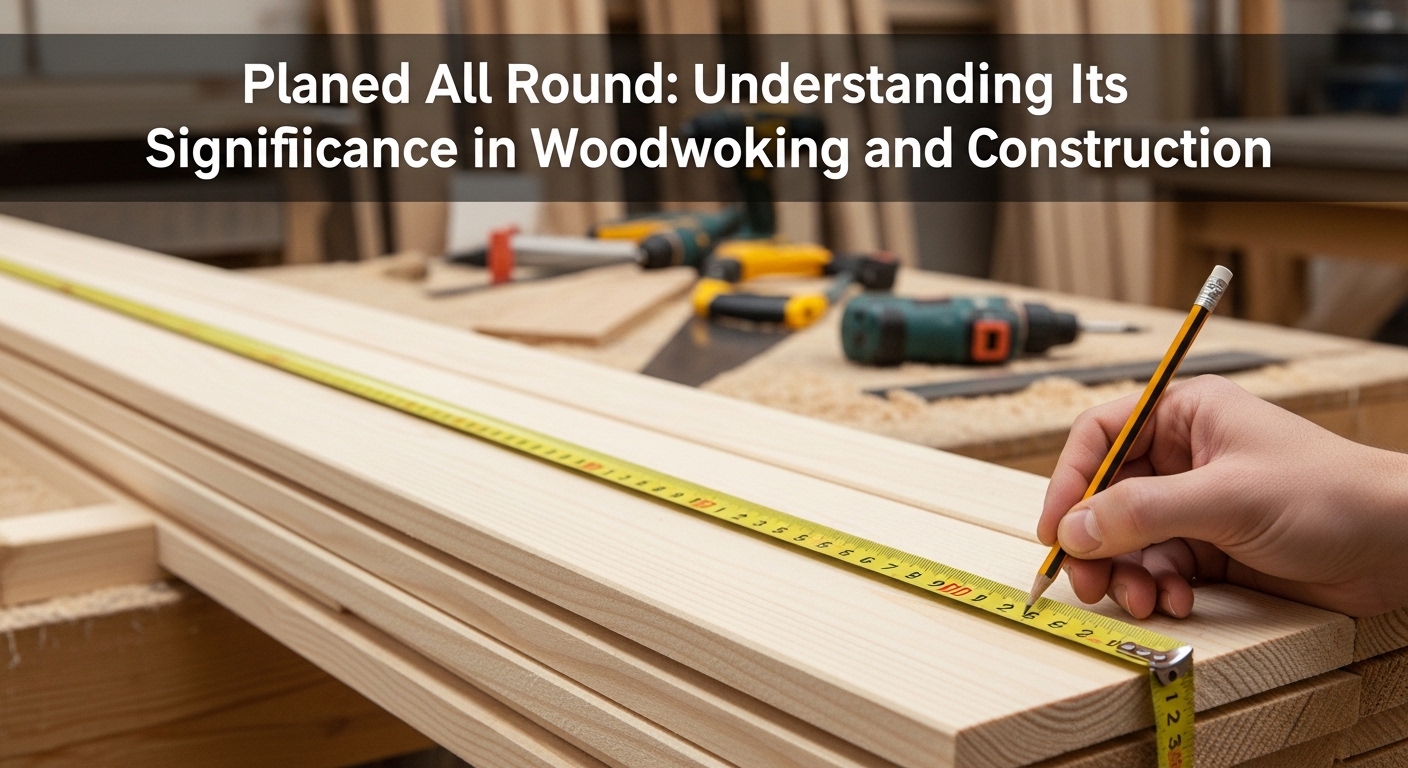
In woodworking and construction, achieving a smooth and precise finish is often critical for both aesthetics and functionality. The term “planed all round” is commonly used to describe timber or wooden components that have been evenly planed on all sides, ensuring uniform thickness, smooth surfaces, and clean edges. This process not only improves the appearance of the wood but also enhances its structural integrity and ease of use in construction projects. Whether for furniture making, flooring, or framing, planed all round wood provides a reliable material that is ready for immediate use without additional preparation. Understanding what this term means, how it is applied, and why it matters can help both professionals and hobbyists make informed decisions when selecting timber for various projects.
What Does Planed All Round Mean?
Planed all round refers to timber that has been carefully processed on all four sides using a planing machine or hand plane. This treatment ensures that each face of the wood is smooth, flat, and consistent in thickness. Unlike rough-sawn timber, which may have uneven surfaces and splintered edges, planed round wood provides a clean, ready-to-use finish. This uniformity allows for precise measurements and seamless joining during woodworking or construction. The planing process also removes minor imperfections, such as knots or surface irregularities, improving the overall quality and strength of the timber. For carpenters, builders, and furniture makers, planed all round wood reduces preparation time, making it an efficient choice for projects that require accuracy and professional finishes.
Advantages of Using Planed All Round Timber
Using planed round timber offers several practical advantages over untreated or rough-sawn wood. Its smooth surfaces make sanding, staining, or painting much easier, while uniform thickness ensures more accurate construction and fitting. The clean edges allow joints to align perfectly, reducing gaps and improving structural stability. Additionally, planed round wood is less likely to warp or twist compared to unplaned timber because the planing process exposes and corrects minor irregularities. This type of timber is also more resistant to splintering, making it safer to handle during cutting, shaping, or assembly. For professionals and hobbyists alike, planed all round wood provides a time-saving solution that guarantees consistent results across a wide range of woodworking and construction applications.
Applications of Planed All Round Timber
Planed round timber is versatile and suitable for various applications in both residential and commercial projects. It is commonly used for furniture making, including tables, cabinets, and shelving, where a smooth and precise finish is essential. Flooring projects benefit from planed round planks because uniform thickness ensures stable installation and a polished look. In construction, it is often used for framing, paneling, and interior joinery where precision and consistency are critical. Planed round timber is also preferred in decorative woodworking, such as moldings and trims, because it requires minimal finishing work. By providing ready-to-use surfaces and edges, this type of timber streamlines the building process and improves the final appearance of any project.
Choosing the Right Planed All Round Wood
Selecting high-quality planed round timber involves considering the type of wood, its grade, and its intended use. Softwoods like pine or spruce are commonly used for construction and general carpentry due to their workability, while hardwoods such as oak or maple are favored for furniture and decorative pieces because of their durability and aesthetic appeal. Inspecting the timber for consistent thickness, smoothness, and absence of major defects ensures the material will perform as expected. The moisture content should also be checked to prevent future warping or shrinkage. Working with reputable suppliers who provide properly planed round timber guarantees better results and reduces the need for additional preparation or corrections during projects.
Maintaining and Working with Planed All Round Timber
Even though planed round timber is ready to use, proper handling and maintenance can extend its lifespan and preserve its quality. Storing timber in a dry, ventilated area prevents moisture absorption and minimizes the risk of warping or decay. When cutting or joining planed round wood, using sharp tools ensures clean edges and prevents damaging the smooth surface. Sanding lightly before finishing can help remove any minor marks from handling while maintaining the uniformity achieved through planing. Regular care, such as cleaning and applying protective coatings, can enhance both the appearance and durability of furniture or construction elements made from planed all round timber.
Conclusion
Planed round timber is a valuable material for anyone involved in woodworking or construction. Its smooth surfaces, consistent thickness, and precise edges make it ideal for creating high-quality furniture, stable flooring, and accurate structural components. By understanding its benefits, applications, and proper handling, professionals and hobbyists can ensure their projects achieve both durability and a polished, professional finish.